Ammunition
Bismuth, TSS, and Copper: A Field-Tested Cheat Sheet for Matching Non-Toxic Ammo to Older Shotguns
By Staff · June 28, 2026
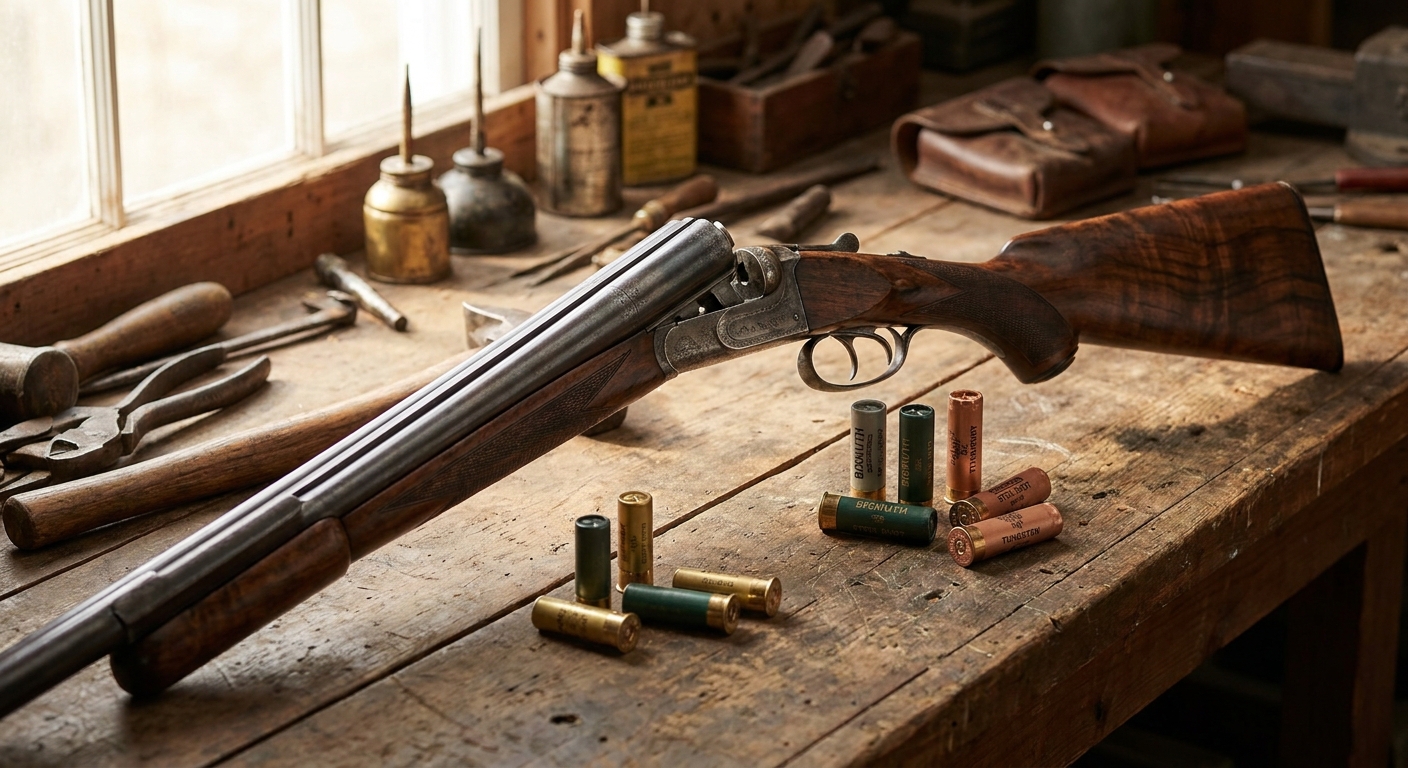
Your grandfather's Parker sits in the safe while you hunt public land with a synthetic pump, not because the Parker won't shoot, but because you've been told non-toxic shot will wreck it. Meanwhile, lead bans spread—waterfowl since 1991, all hunting on federal waterfowl production areas, California statewide in 2019, Maryland moving toward a 2029 ban for all public land hunting—and the regulatory vise tightens every season. The conventional wisdom says vintage shotguns and lead-free mandates don't mix. It's half right: steel shot can destroy a pre-1980s barrel. But bismuth, tungsten super shot (TSS), and copper-plated loads have transformed the non-toxic landscape. Matching the right shot type to barrel age, chamber length, and choke style lets vintage guns hunt responsibly on public land. The ammunition exists. The only question is whether vintage gun owners will do the work to match it to their guns.
Why Steel Shot Became the Bogeyman—And Why That Fear Spread Too Far
Steel shot does not compress like lead. When forced through tight choke constrictions it can score barrels, create cosmetic rings approximately 0.005 inches high one to three inches rearward of the muzzle, or in severe cases swell and bulge the barrel at the choke. High-quality stack-barrel and side-by-side shotguns often use thin-wall barrels to save weight, putting them at greatest risk. Older shotguns from the late 1800s and those with Damascus-style barrels were not heat-treated or made with alloys as tough as modern steel-safe guns, making them particularly vulnerable.
Early steel shot and cheap promotional ammunition scored bores due to poor wads that lacked the extra protection steel requires, creating horror stories that now haunt all non-toxic shot—even though modern premium steel and better wads have largely solved this in guns designed for steel. The legitimate danger of steel has been generalized into a blanket fear of all non-toxic loads, but bismuth, TSS, and copper occupy entirely different positions on the hardness spectrum. Bismuth is explicitly certified safe for vintage shotguns, including those with fragile Damascus barrels. TSS creates higher chamber pressures and can damage vintage barrels due to its extreme hardness. Copper-plated shot is much softer than steel, with the plating acting as a lubricant that reduces friction. Lumping them together as "non-toxic" obscures the differences that matter most to anyone trying to protect a grandfather's Parker or a Belgian Browning.
Bismuth: The Universal Safe Choice for True Vintage Guns
Bismuth is certified safe for vintage shotguns, including Damascus barrels, because it is one of the softest non-toxic shot types and compresses through fixed chokes without cracking older barrels. With a density of 9.6 g/cc, it closely mimics the density and energy transfer of lead, making it the nearest ballistic substitute among non-toxic options.
Kent Cartridge, RST Shells, Federal Premium HEVI-Bismuth, and Boss Bismuth all manufacture bismuth loads explicitly marketed as safe for vintage and Damascus-barreled shotguns. RST Shells produces bismuth ammunition in 2½-inch low-pressure shells designed specifically for vintage shotguns with shorter chambers, solving the chamber-length problem that plagues many heirloom guns.
Bismuth performs best inside 40 yards, where its lead-like density delivers clean kills, but it loses effectiveness at extended ranges where pellet deformation becomes a factor. The cost is higher than steel or copper. But the trade-off is clarity: bismuth lets you shoot Damascus barrels, fixed full chokes, and 2½-inch chambers without gambling on compatibility.
TSS: Maximum Lethality, Maximum Risk—Know Your Gun Before You Load It
TSS has a density of 18 g/cm³, significantly higher than lead, which delivers devastating penetrating power and allows hunters to drop shot sizes while maintaining lethality at extended ranges. It also creates higher chamber pressures of roughly 10,500 to 14,000 psi and can damage vintage shotgun barrels or choke tubes due to its extreme hardness.
Most vintage shotguns, especially those with Damascus barrels, were not designed for modern high-pressure loads, ruling out TSS for pre-1950s guns entirely. For post-1950s steel-barreled shotguns with screw-in choke tubes and proof marks indicating modern pressure tolerance, TSS becomes viable—but gunsmiths recommend starting with cylinder choke and avoiding chokes above modified to prevent forcing cone scoring, and verifying chamber length to ensure shells match.
TSS is the choice for upland hunters who need reach on pheasants or late-season grouse at 45-plus yards, not waterfowlers who need volume of shot, because TSS's density means fewer pellets per ounce and higher cost per round. If your gun dates before 1950, has Damascus barrels, or lacks modern proof marks, TSS is off the table. If you're shooting a 1960s Remington 1100 or a 1970s Browning Citori with screw-in chokes, it becomes viable—but only with careful patterning and choke management.
Copper-Plated Shot: The Affordable Middle Ground for Mid-Century Guns
Copper-plated shot is much softer than steel, making it safe for older barrels, and the copper plating acts as a lubricant reducing friction between pellets and the bore. Boss Bismuth produces copper-plated loads noted as safe for vintage shotguns, offering a more affordable alternative to pure bismuth for high-volume shooters. Federal regulations approve corrosion-inhibited copper and copper-clad iron as non-toxic shot types, giving hunters multiple copper-based options between bismuth's softness and steel's hardness.
Copper works well in mid-century guns—1950s through 1970s American doubles and pumps—with proof marks confirming modern pressure tolerance, especially with screw-in chokes or moderately open fixed chokes. For dove and quail hunters who burn through cases rather than boxes, copper-plated shot delivers adequate lethality at typical ranges without the premium price of bismuth or TSS. Not as universally safe as bismuth for the most fragile vintage guns, not as devastating as TSS at range, but practical and accessible for the modern-vintage category. If you're running a Browning Auto-5 or a Winchester Model 12 through a full September dove season, the cost difference between copper and bismuth becomes substantial.
Decode Your Gun Before You Buy a Box: Chamber, Choke, and Proof Marks
Before selecting a load, verify three specs: chamber length, choke constriction, and proof marks. These determine whether you're shopping for bismuth, copper, or TSS—and whether you need 2½-inch shells or can safely run 2¾-inch loads.
Older shotguns often have 2½-inch chambers while standard modern shells are 2¾ inches; using a longer shell in a shorter chamber increases pressure dangerously and can damage the barrel. Chamber length is usually stamped on the barrel flat or near the receiver—look for markings like "2½", "2¾", "70mm", or "65mm". Miss this step and even the softest bismuth load can become dangerous if the hull extends beyond the chamber.
Fixed full chokes create the tightest constriction and require the softest shot—bismuth is safe because it compresses like lead, steel is dangerous, and TSS should be avoided entirely in fixed full chokes on vintage guns. Steel requires improved cylinder or modified chokes at most. For TSS, gunsmiths recommend cylinder choke and avoiding chokes tighter than modified to prevent forcing cone scoring.
Pattern Your Gun—It's the Only Truth That Matters
Patterning proves whether your specific gun-and-load combination delivers adequate pellet density at the ranges you actually hunt—what works in a proof house or forum post may not work in your 1963 Browning Superposed with modified chokes. Set up a patterning board at your typical hunting range—25 yards for quail and woodcock, 35 yards for pheasants and doves—and fire at least five rounds.
Non-toxic shot types pattern differently than lead: bismuth patterns similarly, TSS throws tighter patterns with fewer pellets, and copper may pattern slightly more open. Patterning also serves as a barrel inspection: after firing a dozen rounds, examine the bore and choke area for scoring, bulging, sticky extraction, or blown primers—any sign of stress means stop immediately and consult a qualified gunsmith before hunting with that combination. The specifications get you close. Only patterning tells you whether that 1955 Parker with improved cylinder chokes actually throws a lethal pattern at your typical ranges.
The Real Stakes: Keeping Vintage Guns in the Field and Hunters on Public Land
Non-toxic shot protects raptors, scavengers, and waterfowl from lead poisoning when they consume gut piles or retrieve crippled birds—choosing bismuth or TSS over lead is an act of respect for the entire ecosystem, not just the game bird in front of you. The technical work of decoding chamber lengths, matching choke constrictions, and patterning loads is worth it because it allows hunters to carry forward both traditions—hunting with quality firearms passed down through generations, and responsible stewardship that ensures public land remains open to hunters.
There is no longer any legitimate excuse for running lead through a classic bird gun on public land: bismuth, TSS, and copper have eliminated the technical barriers, and the only remaining obstacle is the hunter's willingness to do the homework. The Parker didn't belong in the safe in the first place. It belongs in the grouse cover and the dove field. The gunmaker who shaped those barrels trusted you to care for his work. The raptors cleaning your gut piles depend on you making different choices than your grandfather could. Both deserve the effort of getting the match right.