Guides
The Clean Gunsmith's Bench: Safer Solvents, Smarter Ventilation, and Responsible Waste Disposal
By Staff · July 13, 2026
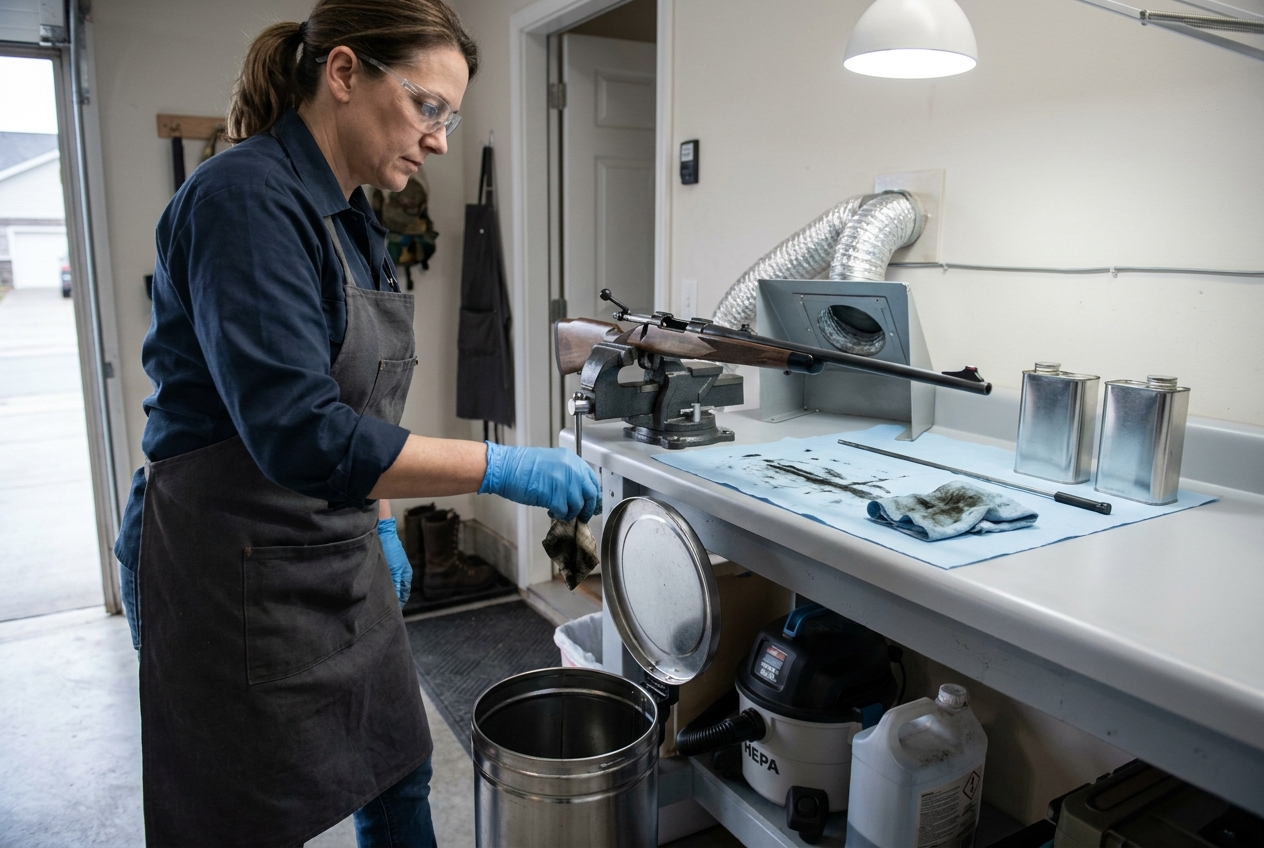
Every skilled trade has always understood that managing the hazards of the work is inseparable from doing the work well. Cabinetmakers control dust. Machinists manage metal shavings and cutting fluids. Welders handle fumes and slag. The gunsmith's bench handles lead residue from primers and bullets, solvent vapors from cleaning chemicals, and combustion residue from barrels—substances that belong in the same conversation.
Treating these materials with the same competence you bring to fitting parts or bedding a stock is about honoring the craft tradition and protecting the household and land where you practice it. A clean bench and responsible waste handling are part of the heritage standard that separates skilled craftspeople from hobbyists who just happen to own tools.
Where Lead Accumulates and How to Contain It
Lead exposure from firearms cleaning occurs when lead dust and particles from primers, bullets, and barrel residue transfer to hands, where they can be absorbed through skin or ingested if you eat, drink, or touch your mouth before washing. There is no safe level of lead exposure—once lead enters your body, it accumulates and causes long-term harm.
In a gunsmithing workshop, lead contamination settles on surfaces, tools, and clothing, creating a persistent source of exposure that spreads to your home if not properly managed. Lead particles bond to skin pores, and regular soap alone often fails to remove them. Wash hands with cold, soapy water and lead-removal soap, such as Hygenall LeadOff, or wipes immediately after exposure.
Line work surfaces with disposable pads to trap lead residue and isolate cleaning tools in sealed containers to avoid cross-contamination. Clean workshop surfaces with wet mopping or a HEPA vacuum rather than dry sweeping, which spreads airborne lead.
The simple routine—disposable bench pads, sealed tool storage, wet cleanup, and immediate hand washing with lead-specific soap—keeps lead where it belongs and stops it from walking through your house on your hands, clothes, and shoes.
Choosing Solvents and Building Real Ventilation
Traditional gun solvents often contain harsh industrial chemicals like methanol, acetone, and MEK, which evaporate rapidly and produce intense, toxic fumes unsafe around pets or children. Aerosol Ballistol contains 33% VOCs, creating a significant inhalation hazard, while its non-aerosol version contains only 5% VOCs. Mineral spirits are less volatile but still contain significant VOCs; their flash point sits around 100°F, compared to near 55°F for acetone or kerosene-based cleaners.
Modern water-based, low-VOC gun cleaners offer the highest safety profile with minimal fumes. Modern military-grade non-toxic solvents have flash points of 150°F, classifying them as non-flammable and safer for indoor use.
An open window is not real ventilation. Residential homes generally require only 0.35 air changes per hour for living areas, which is insufficient for any workshop activity. Industry best practices recommend 4–6 ACH for general light fabrication in home hobby shops and 10–12 ACH for welding or solvent-based finishing; industrial spray booths require 60–90 ACH, averaging 75 ACH.
To calculate required airflow: CFM equals volume in cubic feet times ACH divided by 60. A 12-by-12-by-8-foot workshop totaling 1,152 cubic feet targeting 6 ACH requires approximately 115 CFM continuously. For solvent work or spray painting, local exhaust with hoods at the source is more effective than general room ventilation alone—OSHA requires capture velocities at the source to remove contaminants before they disperse.
Disposing of Oily Rags, Solvents, and Lead-Contaminated Waste
Oily rags soaked with drying oils like linseed oil, stains, or varnishes undergo oxidation that generates heat; if piled, balled, or stored in a non-ventilated container, this heat cannot escape, leading to spontaneous ignition.
Store oily rags in a UL-listed metal oily waste can with a tight-fitting, self-closing lid—never plastic, which can melt and spread fire. OSHA Standard 1926.252(e) mandates keeping oily rags in a covered, fire-resistant container emptied every day. Alternatively, lay rags flat on a non-combustible surface like concrete or hang them on a clothesline outside, in the shade, away from structures—never piled or balled—to allow heat to dissipate. Once the oil is completely dry, often after several days, the rags are no longer a fire hazard and can go in normal trash.
Gun cleaning solvents and solvent-soaked cleaning patches are classified as household hazardous waste and must be disposed of through local hazardous waste collection programs, not via regular trash, drains, or storm sewers. Never pour solvents down household drains, storm drains, or onto the ground, as this contaminates water supplies and harms wildlife; avoid letting solvents evaporate in open containers, which is often illegal and poses fire hazards. Patches or rags soaked in solvents should be stored in a sealed metal container or soaked in water until disposal and taken to a hazardous waste facility.
To sideskip hazardous waste issues altogether, consider switching to non-toxic cleaners like Simple Green or soapy water such as Dawn dish soap, which are effective for removing residue without requiring special disposal. Some shooting ranges or gun shops may accept used solvents for recycling or safe disposal.
Lead-contaminated waste from household sources—including cleaning rags and disposable patches—is generally exempt from hazardous waste regulations and can be disposed of in regular municipal trash, provided it is sealed in heavy-duty, leak-proof garbage bags to prevent dust spread. Large items should be wrapped in two layers of 6-mil plastic sheeting and sealed with strong tape. Liquid lead-contaminated waste should be solidified by mixing with an absorbent such as kitty litter and allowed to dry completely before disposal. Contact your local municipal solid-waste agency or county environmental health staff to confirm specific regulations, as some localities require disposal at household hazardous waste collection sites even for exempt household waste.
Why Shop Hygiene Is Inseparable from Quality Work
A clean bench is not a side concern—it is the foundation that makes precision work possible. Lead residue on your hands transfers to wood stocks, blued finishes, and oiled metal, leaving contamination that degrades the surfaces you worked so carefully to prepare. Solvent vapors drifting through an unventilated shop dull your attention and tire you faster, degrading the focus required for fitting parts, adjusting triggers, or bedding actions.
Controlling contamination—through disposable bench pads, proper hand washing, real ventilation, and responsible waste disposal—sharpens your attention to detail and protects the precision surfaces that define quality gunsmithing. If gunsmiths treat their craft as seriously as cabinetmakers or machinists treat theirs, then managing lead, solvents, and residue is not an added burden—it is simply part of what it means to do the work well.