Opinion
How gun owners can be better land stewards
By Staff · June 26, 2026
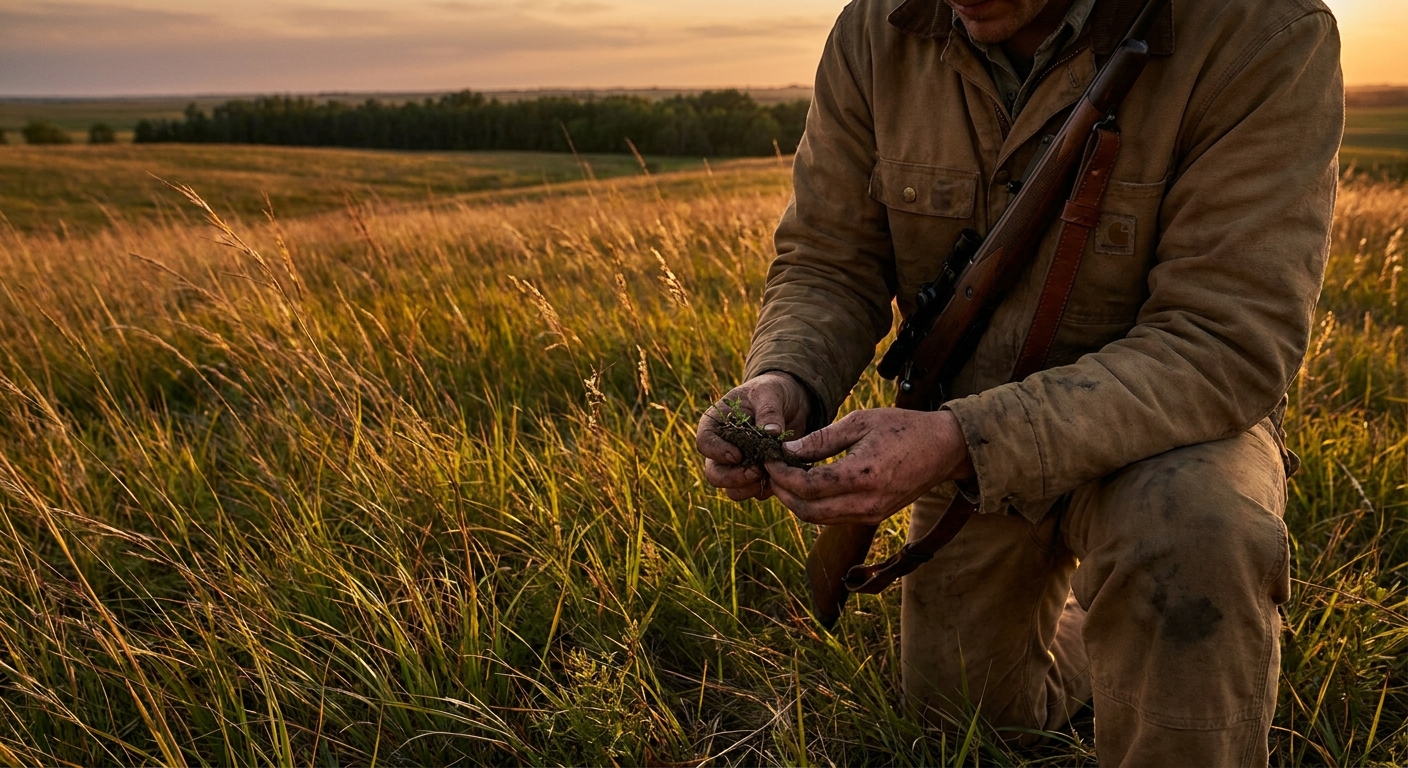
We inherit rifles, shotguns passed down through generations, sometimes with stories of first hunts or legendary shots etched into family memory. We inherit access to land — public tracts, private parcels where we're welcomed back year after year, shooting ranges where we learned to handle a firearm safely. We inherit tradition itself: the knowledge of when to hunt, what to look for, how to track and clean game, the rituals that connect us to our elders and to the landscape.
But inheritance runs two ways.
What we receive carries an obligation to leave something intact, even improved, for those who come after us. Land stewardship is the unspoken contract behind gun ownership: you get to use the land, the wildlife, the resources — and in return, you become responsible for their persistence. This isn't about regulation or outsider pressure; it's about whether we're serious when we talk about heritage and responsibility, or whether those words are just convenient cover.
Lead ammunition is likely the greatest largely unregulated source of lead knowingly discharged into the environment in the United States. Outdoor shooting ranges deposit more lead into the environment than any U.S. industry except metals mining and manufacturing, with hundreds of tons per day from billions of rounds fired annually. At ranges, lead concentrations in soil range from 791 mg/kg to 7,265 mg/kg — dozens to hundreds of times higher than control samples — and exceed EPA critical limits of 400 mg/kg at ranges operating more than 15 years.
Those lead particles remain in soil for decades, reducing fertility, disrupting plant growth, and triggering erosion where contaminated ground fails to support native grasses; both cultivated and wild plants absorb lead up to 50 times higher than controls. In the field, lead ammunition causes poisoning, behavioral changes, reduced survival, and death across more than 130 species of wildlife. Scavengers including eagles, condors, vultures, and bears are secondarily poisoned by consuming animals shot with lead ammunition or eating gut piles left behind.
These aren't abstract threats or anti-gun talking points — this is what our own spent rounds are doing to the ecosystems we depend on. The U.S. banned lead shot for waterfowl hunting in 1991, proving that regulation follows when shooters don't self-regulate.
Switching to non-toxic ammunition isn't costless or effortless. Steel shot is the most commonly used alternative and is priced similarly to lead, though hunters need to increase shot size by at least two sizes — for example, using number three steel instead of number five lead. Bismuth performs more like lead and is safe for older barrels and fixed-choke guns, though it costs approximately three dollars per round. Copper is the standard material for non-toxic rifle bullets, offering reliable performance for hunters willing to invest in the transition. There is no evidence that non-lead shot or bullets cause negative effects on birds, and these alternatives work effectively when specific usage rules like shot size adjustments are followed.
Yes, non-toxic ammunition often costs more — but the cost of doing nothing is far higher in contaminated land, poisoned wildlife, and lost access. The question isn't whether we can afford to switch; it's whether we can afford not to.
Access is precious, but unlimited access destroys what we love — trampled vegetation, eroded trails, wildlife pushed out of critical nesting or feeding areas. Habitat loss and degradation are the leading causes of species declines in the United States, with land and sea use change affecting 82 percent of imperiled species. Thirty-four percent of plants and 40 percent of animals face extinction, and 41 percent of ecosystems risk range-wide collapse. Imperiled species lose the most habitat — up to 96.4 percent — on private lands without conservation easements, compared to only 3.6 percent on federal lands.
Real stewardship means knowing when to stay out, rotating hunting areas to let habitat recover, respecting seasonal closures even on land where enforcement is light or nonexistent. It means reading the land — noticing when trails are widening, when nesting birds are stressed, when game populations are thinning — and responding with restraint, not entitlement. Genuine stewardship is what you do when access is yours to take but you choose to limit yourself anyway.
Gun owners have funded conservation on a massive scale through the Pittman-Robertson Act, which collects an 11 percent excise tax on sporting rifles, shotguns, ammunition, and archery equipment, and a 10 percent tax on handguns. The act generated nearly 1.2 billion dollars in fiscal year 2023, surpassing the previous record of 1.1 billion set in 2022, and has distributed over 25 billion dollars for state conservation and public access projects since its establishment in 1937.
But writing checks through excise taxes isn't enough. Habitat restoration means planting native grasses, removing invasive species, maintaining water sources, creating buffer zones that support the game populations we hunt. At shooting ranges, implementing Best Management Practices including spent lead removal, recycling, and soil reclamation is crucial; without them, remediation can cost millions of dollars. This work isn't separate from hunting and shooting — it's foundational to it, the labor that earns continued access and ensures there's something left to pass down.
Switching to non-toxic ammunition requires relearning ballistics we thought we'd mastered. Limiting access means walking away from a good hunting spot because the habitat needs rest, even when nobody would know if we stayed. Habitat work means spending weekends pulling invasives and replanting natives instead of sighting in rifles or scouting new areas. These aren't concessions or compromises — they're proof that we're serious about the legacy we claim to honor. If we're unwilling to bear these costs, we're not stewards — we're just consumers, extracting value from the land without investing in its future. The land doesn't care about our rhetoric or our traditions — it responds only to what we actually do. That's the inheritance that matters: not the rifles we pass down, but the land we leave intact, the wildlife populations we sustain, the access we preserve through the hard work of genuine care.