Opinion
The Hunter's Covenant: Materials, Ammunition, and the Mark You Leave
By Staff · June 26, 2026
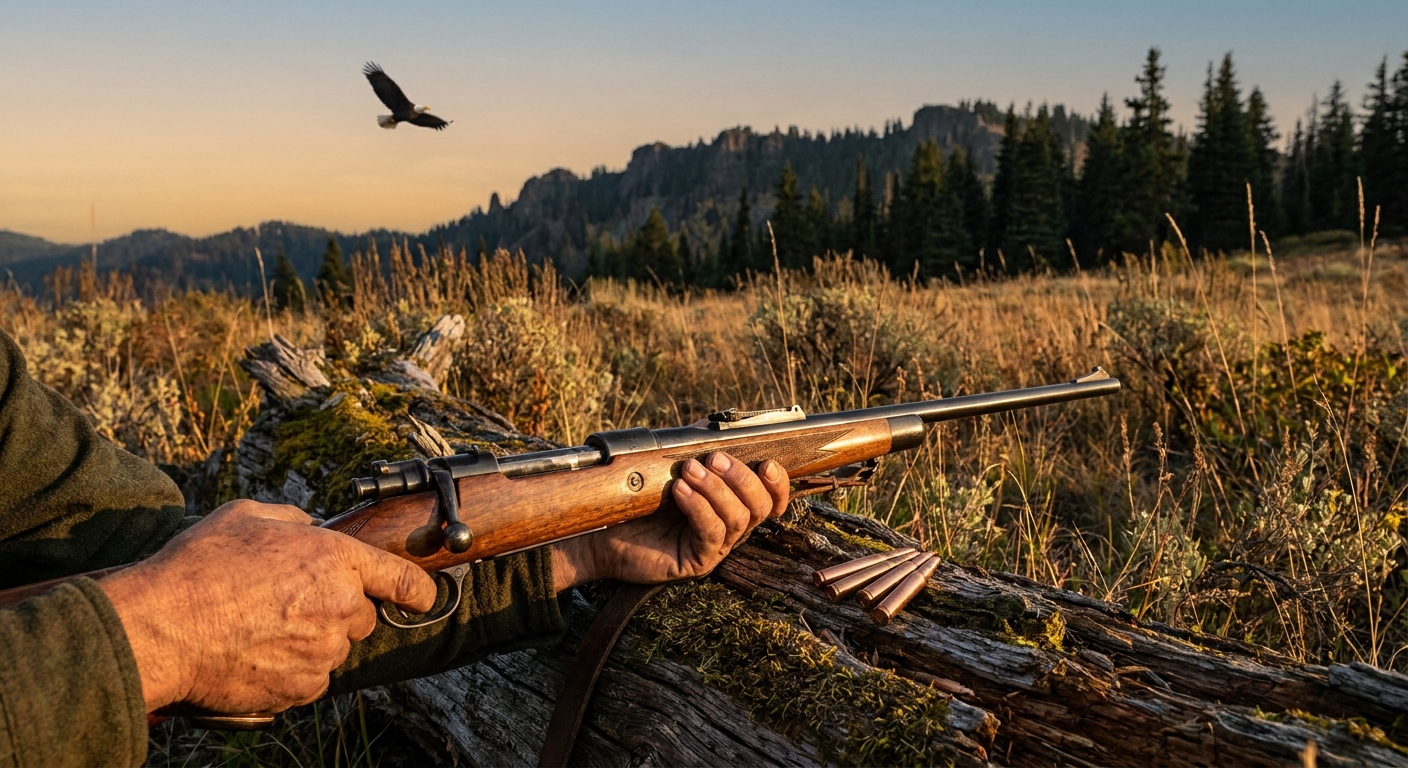
The question of eco-friendly guns isn't about political positioning or consumer trends—it's about whether your choices align with the responsibility you accept when you hunt. Every firearm, every round fired, leaves a mark on the land and the animals that share it. The question is whether that mark honors or betrays the relationship between hunter and habitat. The materials in your rifle and the composition of your ammunition aren't abstractions. They're direct expressions of what you value.
What We Leave Behind
Hunting ethics have always included care for the land and the species that depend on it. What's changed is our understanding of how choices ripple through ecosystems.
Lead ammunition fragments easily upon impact, dispersing toxic particles throughout an animal's tissue and gut pile that scavengers will consume. At least thirty species of terrestrial birds and thirty-three raptor species globally—eagles and condors among them—suffer lead poisoning from ammunition fragments. During a ten-year period, seventy-five percent of admitted Bald Eagles had measurable lead in their blood; only five percent of those with elevated levels survived. In Montana, ninety-seven percent of sampled Golden Eagles showed elevated blood-lead levels. An estimated fifteen million mourning doves die annually from ingesting spent shot.
Lead shot can persist in soil and water for a hundred to three hundred years, accumulating in areas with acidic conditions where lead is more easily mobilized. These aren't hypothetical risks—they're documented consequences affecting the raptors circling overhead and the game populations hunters depend on.
Plastic wads littering wetlands, disposable firearms destined for landfills, and cheap manufacturing that treats guns as consumables rather than heirlooms—all represent a departure from the stewardship ethic serious hunters recognize.
Materials That Last
The materials that define heritage firearms—hardened steel, walnut, minimal finishes—weren't chosen for environmental reasons, but they embody environmental virtues nonetheless.
Steel frames offer superior dimensional stability, maintaining tight tolerances over fifty thousand or more rounds. Properly maintained, they're virtually indestructible, with heirloom-quality longevity exceeding a hundred years. Steel is highly recyclable, meaning even a damaged firearm can be reclaimed rather than landfilled.
Walnut is strong, stable, and ideal for high-end firearms, with attractive grain patterns and workability that allows shaping and finishing with oils or water-based organic coatings. Wood processing for gun stocks produces nonpolluting waste that can generate energy, reducing fossil fuel dependence. Turkish walnut is prized for quality and grain consistency, but sustainability requires Forest Stewardship Council (FSC) certified supply chains guaranteeing reforestation and minimal ecological harm, with certified companies using innovative processes to produce stocks with low CO2 emissions.
Polymer frames offer practical advantages—immunity to rust, resistance to neglect, no oil required—reducing chemical waste and maintenance burden. They're significantly cheaper and easier to manufacture, requiring less energy and raw material, and modern engineering-grade polymers have been tested to thirty-five thousand to a hundred thousand rounds. The trade-off is disposal complexity and the open question of whether polymer firearms will achieve multi-generational lifespans, but their lower production footprint makes the calculation less straightforward than traditionalists might assume.
What matters is choosing materials and construction that reflect an intention to use, maintain, and pass on rather than discard and replace.
The Ammunition Question
The ammunition question is where stewardship becomes most concrete—what you fire into an animal doesn't disappear; it enters the ecosystem.
Before federal bans on lead shot for waterfowl, millions of ducks and geese died annually from ingesting lead pellets; the ban reduced lead exposure by fifty percent and spared an estimated 1.4 million ducks annually.
Non-toxic alternatives include copper bullets for rifles and steel, tungsten, bismuth, or copper-based shot for shotguns, all approved by wildlife services based on toxicity evaluations. Copper or copper-zinc alloy ammunition poses no expected toxic risks to scavengers, predators, or the wider environment, and game meat shot with copper bullets remains free of lead contaminants.
Copper bullets retain approximately ninety-seven to one hundred percent of their weight on impact, compared to lead-core bullets that typically retain only sixty-five percent as they shed fragments throughout the animal. The result is a clean, narrow wound channel that minimizes meat damage and eliminates the need to pick lead fragments from harvested food.
Copper is lighter than lead, so a copper bullet of the same weight is approximately ten percent longer but typically has a lower ballistic coefficient, leading to a slightly less flat trajectory at long range. Copper bullets are also highly speed-dependent, requiring impact velocities typically above 1,800 to 2,000 fps to fully expand. These performance characteristics require adjustments—understanding your effective range, choosing appropriate loads, sighting in properly—but they're well within the competence expected of serious hunters.
Responsible Manufacture
Responsible manufacture isn't about certifications or marketing language—it's about practices you can verify: small-batch production, transparent sourcing, minimal waste, and a commitment to repairability.
Small-batch craftsmanship naturally reduces waste because each firearm is made with attention to longevity rather than volume, and defects are corrected rather than written off as acceptable loss. Look for manufacturers who can tell you where their materials come from—FSC-certified walnut, recycled steel, transparent supply chains—not vague claims about sustainability.
Repairability is a tell. Manufacturers who design firearms to be serviced, who stock parts for decades, who support gunsmiths rather than planned obsolescence, are expressing an environmental ethic whether they use that language or not. Beware of greenwashing: vague environmental claims, emphasis on packaging over product durability, or marketing that celebrates "green" features while building disposable goods. The best indicator is whether a company treats its firearms as durable goods meant to outlast their original owner.
What to Do
In the field and at the dealer, ecological responsibility translates into concrete decisions.
When buying, prioritize materials and construction that support longevity—steel or quality polymer frames, wood from certified sources, manufacturers with transparent practices and long-term parts availability. Switch to non-toxic ammunition for all hunting—copper bullets for rifles, steel or bismuth shot for shotguns—and take the time to understand their ballistic characteristics.
Maintain what you own with the intention of passing it down: proper cleaning, storage in controlled conditions, periodic inspection by a competent gunsmith, and repairs rather than replacement. Steel frames require consistent maintenance in humidity or saltwater environments but reward that care across generations. Choose finishes that protect without unnecessary chemical load—oil-based treatments for wood, responsible bluing for steel—avoiding harsh coatings that complicate future refinishing.
These decisions matter more than any label because they reflect your actual relationship with the land and the animals—whether you're extracting from the ecosystem or participating in it responsibly.
The Authority You Claim
Ecological responsibility in firearms isn't a compromise with outside pressure—it's an expression of competence and seriousness about your role in the field.
Hunters who choose durable materials, non-toxic ammunition, and responsible sourcing aren't making concessions—they're demonstrating that they understand the full scope of what it means to hunt well. The raptors that suffer lead poisoning, the waterfowl that ingest spent shot, the ecosystems degraded by disposable goods—these are part of the same web that produces the game you pursue and the land you hope to pass on. Taking care of them isn't separate from hunting—it's inseparable from honoring the covenant between steward and land.
Choose well, maintain what you own, and recognize that every decision about materials and ammunition is a statement about what kind of steward you intend to be.