Opinion
Your Grandfather's Shotgun Is the Most Sustainable Firearm You Can Buy
By Staff · June 27, 2026
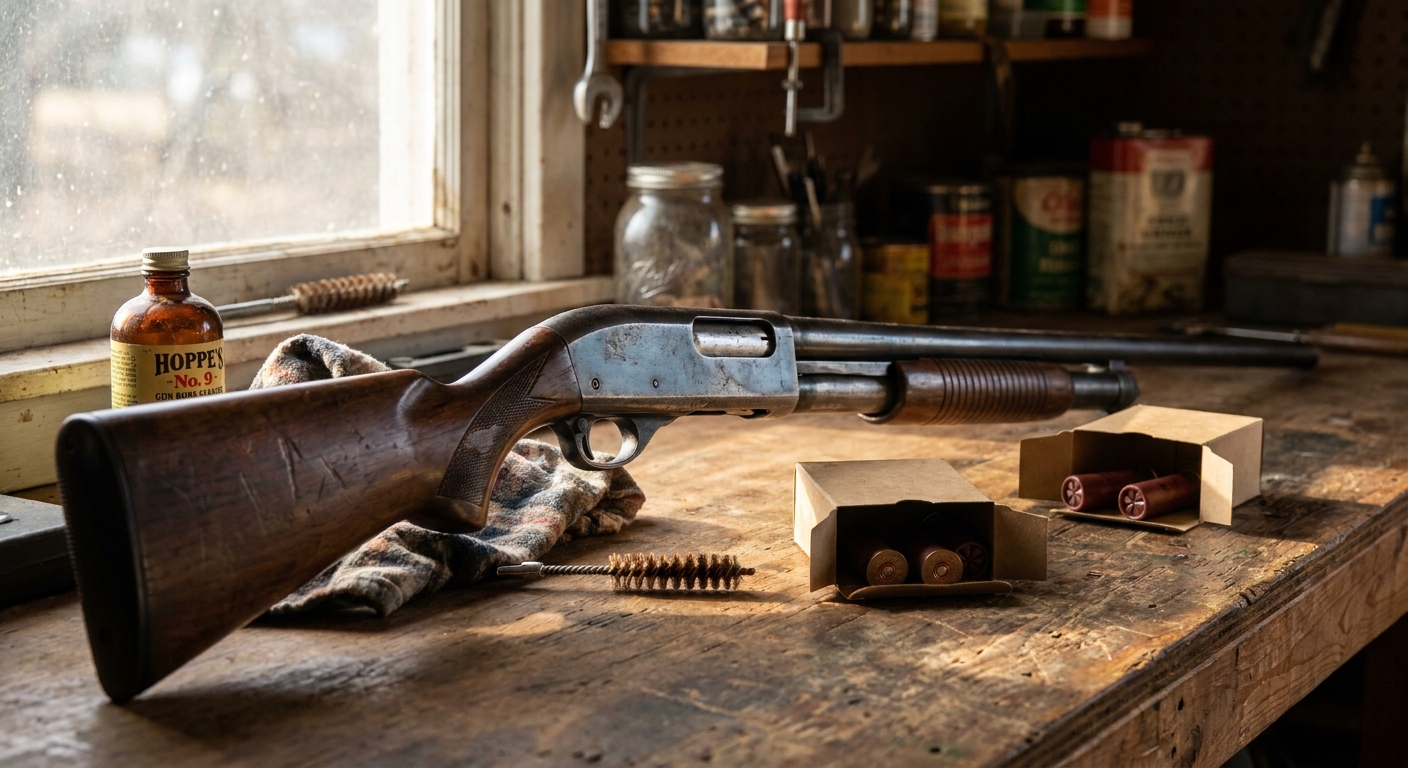
Walk into any gun shop and count the hunters browsing new shotguns while perfectly functional vintage firearms sit unused at home. Thousands of fully functional pre-1970s shotguns gather dust in closets and gun safes while their owners purchase new firearms with significant environmental costs. The industry has convinced us that responsibility means buying their latest model—manufactured this year, shipped across continents, marketed as "sustainable" because it accepts non-toxic ammunition.
Meanwhile, a 1962 Remington Wingmaster that already paid its full carbon cost six decades ago waits in a closet. Its steel was mined, smelted, and machined when Eisenhower was president. That environmental debt is settled. The production of a single new firearm emits under 3 tonnes of CO₂ over its lifetime manufacturing process. Steel production alone accounts for 7% of global greenhouse gas emissions, making every new gun a substantial carbon commitment. No amount of "modern efficiency" changes the physics of extracting ore and smelting steel.
The Material Reality of New Production
Every new firearm begins with raw material extraction: iron ore mining, energy-intensive smelting, and industrial-scale metalworking. Primary steel production via the blast furnace route emits 2.2 tonnes of CO₂ per tonne of crude steel produced. Even the industry's preferred alternative—scrap-based electric arc furnace production—still emits 0.3 to 0.357 tonnes of CO₂ per tonne of steel.
Manufacturers can obscure this with carbon offsets and incremental improvements, but no amount of efficient modern manufacturing can offset the fundamental requirement to extract, smelt, and machine steel for a new gun. The most sustainable product is the one that already exists and requires no new production.
The Non-Toxic Ammunition Excuse
The non-toxic ammunition transition handed manufacturers a golden opportunity. They declared vintage shotguns obsolete, pushed hunters toward new purchases "designed for" steel shot. The nationwide ban on lead shot for waterfowl hunting took full effect in 1991, following a phased rollout beginning in 1987–88. California banned lead ammunition for all hunting with full implementation in 2019, and the U.S. Fish and Wildlife Service phased out lead on some federal lands by 2026.
Industry messaging suggested older guns couldn't handle modern loads safely—a claim that serves sales departments better than hunters.
The three primary non-toxic shotgun ammunition options are steel, bismuth, and tungsten (TSS), with blended loads also highly effective. Steel shot is the cheapest non-toxic option but can damage older or softer shotgun barrels, making it unsuitable for many vintage guns. Manufacturers were content to let this single incompatibility tar all non-toxic options.
What they don't advertise: bismuth shot is 22% denser than steel and safe for vintage barrels due to its softness, offering better knockdown power and making it the preferred choice for hunters using older guns. Tungsten Super Shot (TSS) is 56% denser than lead, delivering unmatched retained energy and cleaner kills at long range. TSS is safe in vintage barrels and costs approximately $10 per shell for pure loads—premium but fully compatible.
With bismuth and tungsten available, any well-maintained pre-1970s shotgun can meet modern non-toxic requirements without compromise. The "obsolescence" narrative was always about moving product.
Evaluating What You Already Own
Not every old shotgun is worth restoring. Learning to evaluate them yourself means you're not dependent on a gun shop's incentive to sell you new.
Start with the bore. Use a bore light to inspect for pitting, bulges, or dark rings that indicate serious damage. Minor surface rust or light fouling can be cleaned. Deep pitting that penetrates the steel wall is a walk-away sign.
Check chamber length with a chamber gauge or by measuring a fired hull. Mixing modern 3-inch shells with 2¾-inch chambers creates dangerous pressure.
Examine wood-to-metal fit. Cracks in the wrist or forend are common and repairable if stable, but splintering or separation at stress points means structural weakness.
Cycle the action repeatedly. Pre-1970s shotguns often slide with effortless motion due to hand assembly and careful fitting. Stiffness, grinding, or failure to lock up properly signals wear or misalignment that requires a gunsmith's attention before firing.
Pre-1964 firearms are considered in a fundamentally different category regarding quality, collectibility, and value—these are always worth professional evaluation. Early Remington 1100s made before 1977 featured deeper bluing, finer walnut, and tighter tolerances than later production. The 1987 dividing line for Remington marks when new ownership began aggressive cost-cutting, replacing machined parts with stamped components.
If the gun passes bore, chamber, wood, and action inspection, it is likely a sound candidate for refresh and field use.
Practical Maintenance, Not Restoration
Returning a vintage shotgun to service is not restoration to collector condition—it is practical maintenance to ensure safe, reliable field performance.
Begin with a complete disassembly and cleaning. Remove decades of fouling, dried grease, and accumulated crud from the action, barrel, and trigger group. Use quality bore brushes, solvent, and patience to remove lead fouling and surface rust without damaging bluing.
Inspect springs, firing pins, and extractors for wear or breakage—these are consumable parts that may need replacement after decades of use. Apply appropriate lubricants to moving parts. Over-lubrication attracts dirt, while under-lubrication causes wear and malfunction.
Learn when to seek a qualified gunsmith. Headspace checks, chamber lengthening, stock repairs, and timing issues require professional expertise. Modern production shotguns are more prone to breakage on first use or requiring gunsmith repair, whereas pre-1970s models were typically functional out of the box.
Performing this work yourself builds competence, self-reliance, and intimate knowledge of how the tool functions. A hunter who can field-strip, clean, diagnose, and repair their own shotgun is never dependent on factory warranties or retail return policies. The refresh process transforms an inherited object into a trusted tool—restoring function to craftsmanship that was built to last generations.
The Long View
A shotgun manufactured in 1955 and still in service in 2025 has already delivered seventy years of utility from a single production event. With proper care, that same firearm can easily serve another fifty years across two or three more generations.
Pre-1970s shotguns feature hand-fitted machined steel components, deep bluing, and fine walnut that modern production—with its stamped parts, synthetic stocks, and reduced hand-finishing—cannot match. Every generation that shoots the inherited gun avoids the full carbon cost of manufacturing a new firearm.
Hunters claim a conservation ethic—managing wildlife, protecting habitat, passing down traditions—yet often succumb to consumerist gear acquisition cycles. Choosing to maintain and shoot a vintage shotgun instead of buying new is a tangible, measurable expression of that ethic applied to material goods.
The gun that served your grandfather in 1960 can serve your grandchild in 2060 with no additional environmental cost beyond cleaning solvent and bismuth shells. It is not nostalgia—it is the most sustainable firearm choice you can make, and it is already hanging in your gun cabinet.