Stewardship
When Restoration Becomes Destruction: The Heritage Firearms Jobs a Responsible Owner Should Refuse
By Staff · July 13, 2026
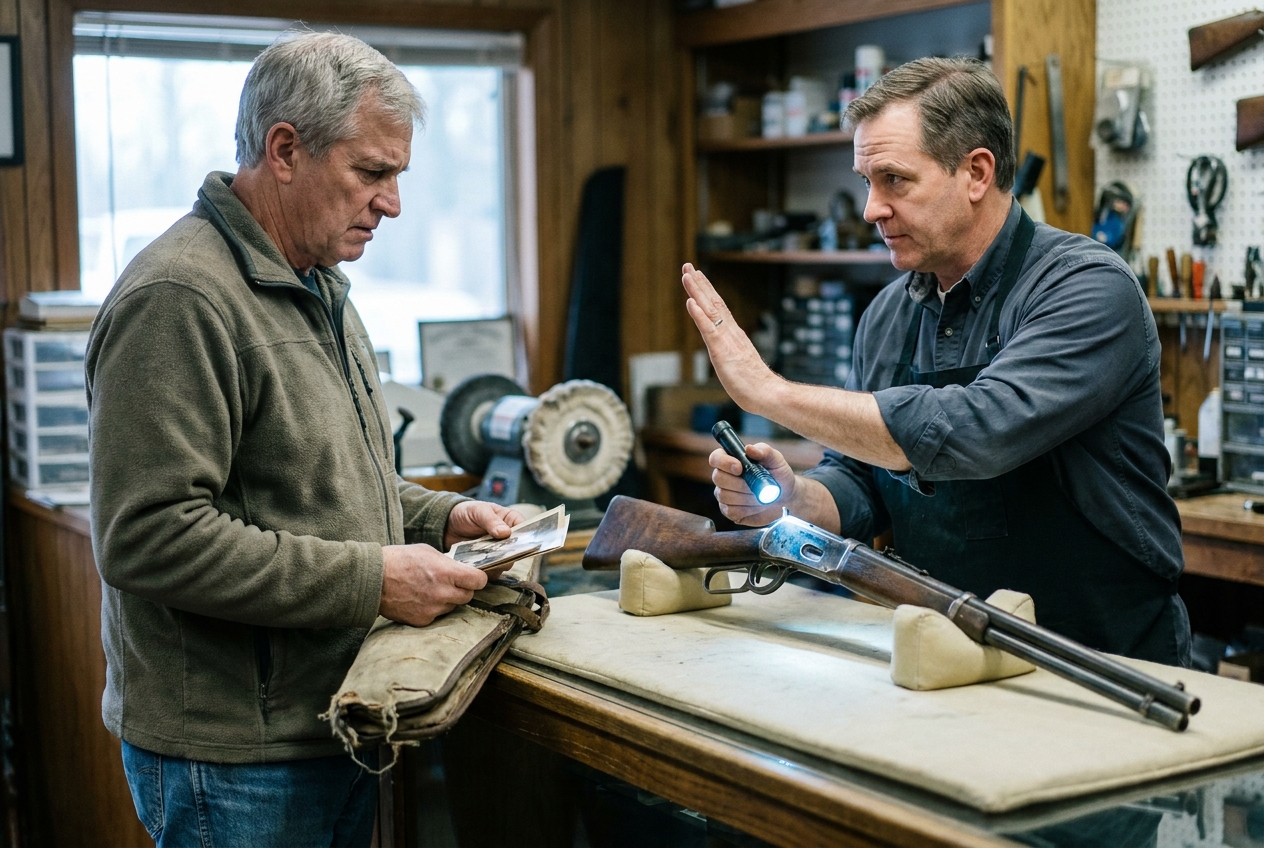
Every heritage gun owner eventually faces the same moment: a grandfather's shotgun that misfires, a Civil War-era revolver with surface rust, or a Winchester 94 with a cracked stock. The instinct is to fix it, make it right, restore it to glory.
That instinct, however well-meaning, is often the first step toward destroying the very thing you're trying to preserve—or worse, creating a hazard that could injure or kill the shooter.
A buffing wheel can erase proof marks and maker's stamps in minutes, turning a documented piece into an anonymous wall-hanger. Indiscriminate chamber reaming to force modern ammunition into an antique chamber can create excessive headspace, causing cartridge case rupture, gas leakage, and potentially fatal accidents.
The difference between preserving a working heirloom and creating expensive scrap metal comes down to judgment—knowing when to repair, when to conserve, and when to let a gun retire with honor.
Three Paths, Three Outcomes
Before touching a heritage firearm, you need to choose among three distinct paths.
Repair means restoring safe function with minimal alteration—replacing a broken firing pin, fixing a weak mainspring, or addressing a mechanical fault that prevents the gun from operating as designed.
Conservation stops active corrosion without altering the current state, maintaining patina, wear, and historical marks. Restoration actively repairs, refurbishes, or replaces parts to return the firearm closer to factory-new condition, often removing patina entirely. Conservation is almost always preferred for maximizing collector value, because collectors prioritize originality and historical authenticity over cosmetic perfection.
Retirement means recognizing that a firearm has given all it safely can and should be preserved rather than shot—not a failure, but an acknowledgment that some guns have earned their rest.
The disasters happen when these paths get mixed: trying to repair a gun that should be conserved, or attempting to restore a piece that should retire.
How Polishing Destroys Value
Aggressive polishing and refinishing are the most common ways to destroy a heritage firearm's value, and they're also the easiest mistakes to make because they look like improvements.
Proof marks—shallow stamps applied during or after manufacture to confirm the weapon is safe for use with the intended ammunition—can be washed out, incomplete, or fully erased by heavy polishing and reblacking. Once gone, you've eliminated the physical proof of the gun's origins. Paper trails such as factory letters, invoices, or auction records often provide more reliable proof of authenticity than current physical condition—but only if the gun still matches its documentation.
Historical wear such as handling marks and owner initials adds collector appeal by showing chain of ownership and use. Wood stock refinishing is risky if overdone; a gentle rub-up preserving honest marks is better than full varnish stripping. Polishing internal parts to remove tooling marks can reduce value; gunsmiths should only address functional issues. For pre-1900 single-action revolvers or highly collectible pieces, original condition is typically more valuable than restored.
The economic reality is stark: restoring or refinishing heritage firearms often decreases their value if the work removes original finishes, patina, or evidence of historical use, though professional restoration can preserve or increase value when addressing neglect like rust or pitting while honoring original craftsmanship and provenance.
A six-figure Colt Walker can become a four-figure parts gun with one afternoon of enthusiastic buffing. The damage is permanent—you can't put the patina back.
When Chamber Work Becomes Catastrophic
If polishing destroys value, improper chamber work destroys lives. This is where well-meaning fixes cross from economic loss into genuine danger.
Headspace is the critical distance between a firearm's bolt face and the point in the chamber that stops the cartridge from moving forward. If a bolt fully closes on a GO gauge, the chamber is within specification. If it closes on a NO-GO gauge, the firearm has excessive headspace and is unsafe to fire. If it closes on a FIELD gauge, headspace is critically excessive and the gun must be removed from service immediately.
Antique chambers may be worn, non-SAAMI, or dimensionally inconsistent, making standard gauges less reliable. Firing a wrong cartridge in an antique chamber can cause catastrophic failure if headspace is already excessive.
The temptation to make an old gun chamber modern ammunition is strong—ammunition is easier to find, and the gun would be more practical. But reaming a worn chamber to accept a slightly different cartridge is playing Russian roulette with metallurgy and geometry you can't see.
When chamber reaming is justified, use piloted reamers to ensure alignment and prevent cutting into the barrel shoulder. Ream incrementally and check headspace after each plunge to avoid over-reaming. On antique firearms, remove the ejector on spring-loaded ejectors or cut clearance notches in gauges to prevent false readings. Ensure the chamber and bolt face are free of dirt, fouling, and rust.
Even with proper technique, some guns simply cannot be safely adapted. The steel is fatigued, the chamber already worn beyond spec, or the original design margins were never adequate for modern pressures. In those cases, the responsible answer is retirement, not reaming.
Conservation That Preserves Function
Understanding what not to do does not mean doing nothing. Conservation is active stewardship, not museum-case paralysis.
Patina is stable surface change from age, air, and UV exposure—harmless and protective. Rust is active corrosion (red or orange) that destroys metal and must be safely converted or removed. For minor rust deposits, use 4/0 ultra-fine steel wool or similar gentle methods, then apply protective wax. Never use wood or metal polishes, oils, or varnishes on heritage firearms.
All conservation repairs and coatings must be reversible. Use materials like Renaissance wax that can be removed without damage as better techniques emerge. When components are missing or broken, use period-correct parts that match original finish, aging new metal to match if necessary. Professional gunsmiths use period-correct methods like slow-rust bluing, Belgian bluing, or nitre bluing to honor original craftsmanship.
If the gun is stable—no corrosion, cracks, or damage—preserve it as-is rather than restore. Restoration is most beneficial for firearms with significant neglect damage such as pitted barrels, rusted mechanisms, and cracked stocks, where returning to the original state enhances both safety and historical integrity.
The conservation path keeps heritage guns in service without erasing their stories. A Winchester 94 that shoots safely after proper conservation work still carries its scratches, its honest wear, and its link to the hunter who carried it.
When Retirement Is the Right Answer
Sometimes the most responsible decision is to stop shooting a gun altogether. That is not failure—it is recognizing that some tools have earned their rest.
A firearm should be retired immediately if it exhibits unrepairable structural damage such as a cracked receiver or bulged barrel, excessive wear that prevents safe operation such as a broken sear or excessive headspace, or if it fails a professional inspection by a certified gunsmith. Irreplaceable historical significance is also a valid reason: a documented Civil War service piece, a presentation-grade firearm with engraving and provenance, or a prototype with unique features may be too important to risk in active shooting.
Professional restoration often costs more than the firearm's value, even compared to buying an unrestored original in near-new condition.
Store retired heritage firearms in acid-free boxes with acid-free tissue or polyethylene foam. Handle non-working weapons with gloves to prevent fingerprint corrosion.
A retired gun still teaches: it demonstrates period craftsmanship, shows honest use, and connects future generations to the people who carried it. That is a form of service, too.
The Working Checklist
Every proposed job on a heritage firearm should pass through these questions—not academic, but the working checklist that separates thoughtful stewardship from expensive mistakes.
Is this work reversible? Techniques and materials that can be removed without harm are always preferable to permanent alterations.
Does this work address a genuine safety issue, or is it cosmetic? Fixing a cracked stock or replacing a broken sear is repair. Polishing out honest wear is destruction dressed as improvement.
Will this work remove, alter, or obscure proof marks, maker's marks, or other evidence of the gun's history?
Does the proposed gunsmith understand conservation principles? Ask whether they use period-correct finishes, whether they preserve patina, and whether they can explain the difference between conservation and restoration.
If the work involves chamber or headspace alterations, can the gunsmith demonstrate proper gauging technique and explain the safety margins involved? If not, walk away.
Is this gun a candidate for retirement rather than repair? Structural damage, excessive wear, or irreplaceable historical significance all point toward preservation rather than active shooting.
The goal is not to keep every heritage gun untouched on a shelf. It is to keep them in service thoughtfully, so that they remain both functional tools and living links to the craftsmen and shooters who came before. That requires restraint, knowledge, and the confidence to say no when the proposed fix would destroy the very thing you are trying to preserve.